A reframe of AI as collective human output, and what it changes about the work designers do.

I’m a technological humanist and designer. I’ve been writing this article with AI, which still feels strange to say plainly. The tool is helping me think through what the tool is made from.
That is either beautiful or deeply weird. I’ve landed on both.
Part of the strangeness is that AI is, in some meaningful sense, made from work like mine. Twenty years of design decisions are probably in a training set somewhere. Component libraries I built. Specs I documented carefully. Pages I designed, revised, shipped, and watched get archived when projects ended. A working model needs more human output than most people pause to consider.
That is the part I keep coming back to. Not the magic of the machine, but the amount of human life inside it.
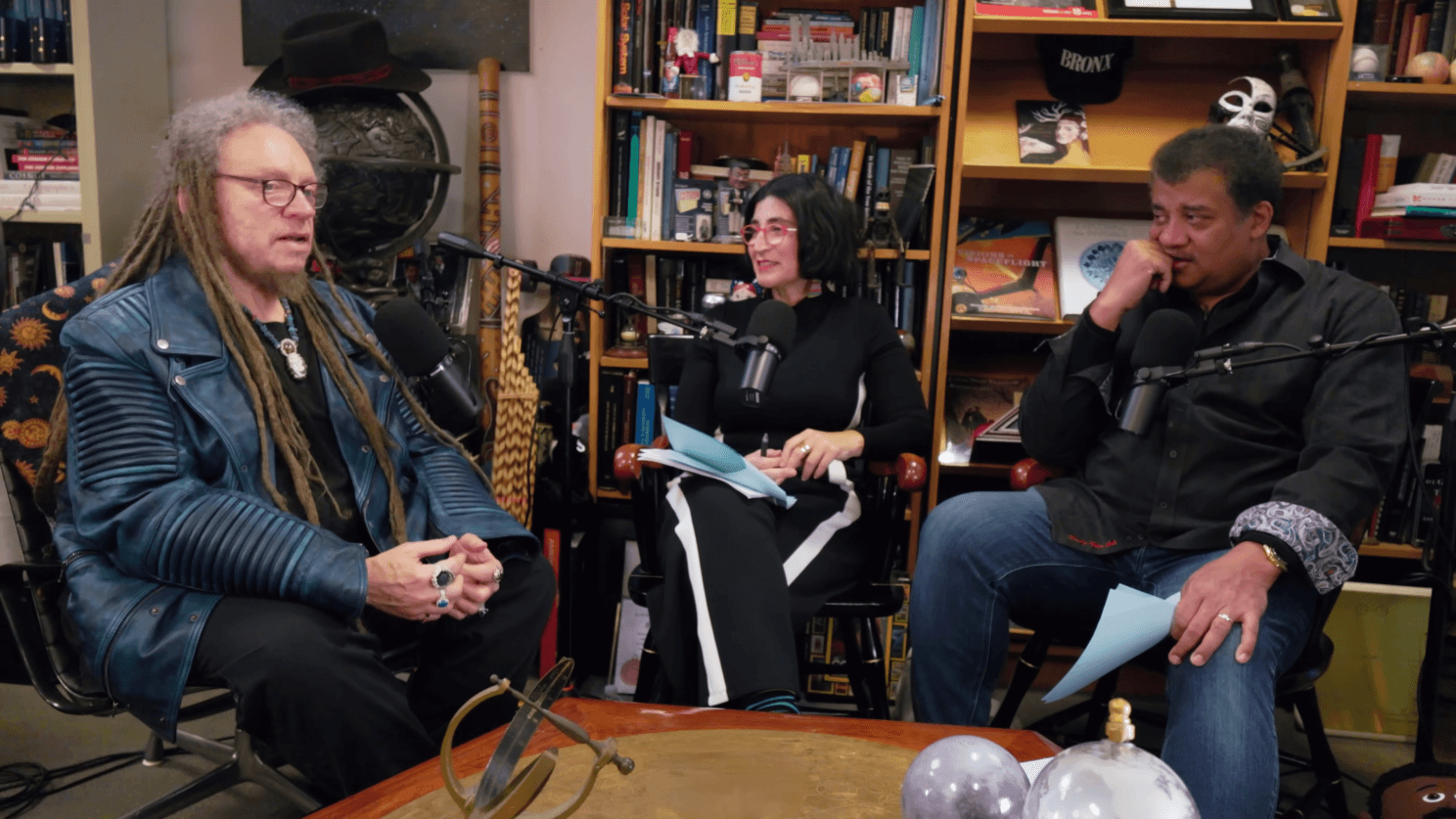
The reframe that started all of this came from Jaron Lanier on the StarTalk episode “There Is No AI, Really. It’s Just People.” Lanier has spent decades as one of technology’s most credible inside critics, and his argument is simple enough to stay with you: there is no AI, really. There are only people.
The model is not an alien mind that arrived from nowhere. It is a massive, decentralized collaboration of everyone whose work, language, images, patterns, code, decisions, and habits ended up in the system. It is not separate from humanity. It is humanity, reorganized through computation.
Once that framing lands, it does not leave.
For designers, this is not entirely new. Every design decision already encodes a model of how people think, what they need, and how they should move through a system. A component library encodes a theory of hierarchy and relationship. An art direction brief encodes assumptions about what an image should make someone feel. A brand system encodes what an institution believes it can say, and how it wants to be trusted.
Designers have always built internal models from lived experience, borrowed references, cultural memory, client constraints, taste, mistakes, and the work of other people. We absorb patterns and apply them to new situations. We make something new from everything we have seen.
AI changes the scale and mechanism of that process. Patterns that used to move through an industry over years now enter training pipelines and reappear inside tools used by millions. The propagation is different. Faster, stranger, harder to trace.
That is where the ethical discomfort begins.
The fear that usually arrives here is job loss. It is legitimate. People are already feeling pressure from companies eager to translate AI into efficiency, often before anyone has seriously asked what is being lost. At the same time, the evidence is more complicated than the headlines. A 2024 MIT study on computer vision tasks found that only a portion of technically automatable work was economically attractive to automate at current costs. Yale Budget Lab’s 2026 labor-market tracker has also found no clear, broad AI-related employment footprint yet.
That does not mean there is nothing to worry about. It means the story is uneven.
Some work will be displaced. Some will be reorganized. Some will become more competitive, more abstract, or harder to enter. Some will become faster while quietly demanding more judgment from the person left in the loop.
That last part is where I feel the change most directly.
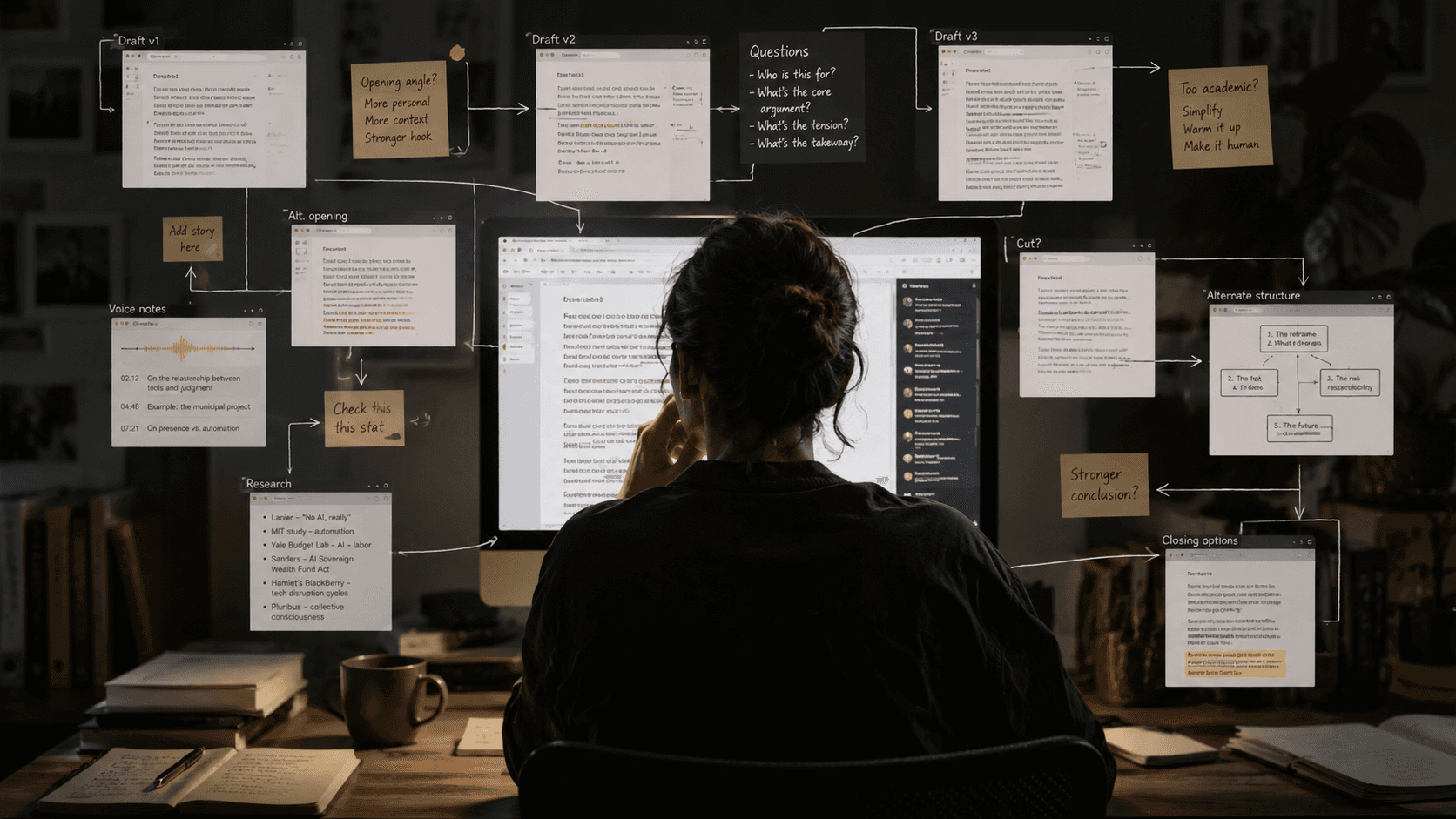
AI has changed the speed at which I reach the part where judgment matters. It can help me draft, compare, summarize, remix, test, and see around a corner. But it does not know the specific person the work is for. It does not know the room. It does not know the institutional tension that made a reasonable idea impossible last quarter. It does not know which word will make someone feel invited instead of managed.
That knowledge was never in the training data.
It is in the relationship.
I have been thinking a lot about that word lately. Relationship. My work has never been only about interfaces. It has been about the relationships those interfaces create: government and citizen, science and participant, operating system and person, brand and community. AI is another version of that same problem, only larger and more unstable.
What kind of relationship are we building between people and these systems?
Do people feel more capable, or more replaceable? More informed, or more dependent? More creative, or more flattened into an average of everything that came before?
Those questions matter because AI is not staying in the lab. It is already in the search bar, the word processor, the design tool, the support chat, the inbox, and the meeting summary. It is becoming ordinary before culture has fully metabolized it.
That is how many technologies arrive. William Powers wrote about this pattern in Hamlet’s BlackBerry: major communication technologies disrupt our lives before we learn how to live with them. The printing press, radio, television, the internet, and the smartphone each changed how ordinary people encountered knowledge, attention, and one another.
AI feels like part of that lineage, but with a strange new intimacy. It does not only carry information. It responds. It writes back. It mimics reasoning. It borrows the shape of a person and offers help in a voice that can feel uncannily close.
That closeness is useful. It is also dangerous.

I have been watching Pluribus on Apple TV. In the show, most of humanity is absorbed into a collective consciousness that appears peaceful, helpful, and content. Carol Sturka, the protagonist, is one of the few people left outside it. She is furious about what everyone around her has given up.
I understand that anger.
The fascination I feel with these tools does not cancel it out. I use AI every day, and I do not experience it as a hive mind I want to join. I experience it more like a working relationship. Different models have different strengths, different moods, different blind spots, different ways of failing. You learn what to ask for, when to push back, when to ignore it, and when the answer is less interesting than the question it helped you find.
More Carol than collective.
That may be the only way I know how to use it honestly.
I do not want AI to replace the human center of the work. I want it to help me reach that center with more clarity. The part that still matters most is not the output. It is the judgment around the output. What is this for? Who does it serve? What does it assume? What relationship does it create? What does it ask people to trust?
The reframe has also started reaching policy. Senator Bernie Sanders introduced the American AI Sovereign Wealth Fund Act in June 2026, a proposal that would give the public a 50 percent ownership stake in the largest AI companies. The logic is blunt: if AI is built from collective human knowledge, then the wealth it generates should not accrue only to a small number of companies and investors.
Whether that bill goes anywhere is almost beside the point. The recognition has entered public language.
We built this.
That sentence changes the argument. It does not solve the labor question or the ownership question or the creative question. But it does make it harder to pretend AI emerged from nowhere.

For designers, the reframe changes how we see our own work. We are not outside the model, nervously waiting to be replaced by it. We are part of the foundation it stands on. Our decisions, patterns, systems, screenshots, libraries, documentation, mistakes, habits, and taste are part of the material these tools are learning from.
That does not make me feel safe exactly.
It makes me feel responsible.
If AI is collective human output, then the work we make now becomes part of the next system, the next pattern, the next invisible assumption. The same has always been true of design, but the feedback loop is faster now.
That means the old questions matter even more.
Was the work humane?
Was it legible?
Did it invite participation?
Did it earn trust?
Did it make someone feel more capable?
Did it treat the person on the other side like a guest?
Those questions are not separate from AI. They are the ground underneath it.
I’m a designer who works in these tools every day. The reframe changed how I see them.
We are not simply being replaced by AI.
We are part of what made it possible.
—-
Sources
Jaron Lanier — "There Is No AI, Really (It's Just People)" — StarTalk with Neil deGrasse Tyson
Neil Thompson et al. — "Beyond AI Exposure: Which Tasks are Cost-Effective to Automate with Computer Vision?" — MIT CSAIL / Initiative on the Digital Economy, January 2024
"Tracking the Impact of AI on the Labor Market" — The Budget Lab at Yale University
Bernie Sanders — Op-ed — The New York Times, June 1, 2026
William Powers — Hamlet's BlackBerry: A Practical Philosophy for Building a Good Life in the Digital Age — HarperCollins, 2010
Pluribus — Created by Vince Gilligan — Apple TV+, 2025

